
- All have
- Product management
- News
- Introduction led
- Corporate store
- FAQ
- Enterprise Video
- Enterprise map

Case Study: Resilient Solar Street Lighting for Tanzania’s Coastal and Equatorial Climate
Date:
Mar 12,2026
Executive Summary
In Tanzania, road lighting infrastructure faces a unique "Equatorial Trifecta": intense UV radiation, high ambient temperatures, and the aggressive salinity of the Indian Ocean. Standard solar solutions often fail within 24 months under these conditions.
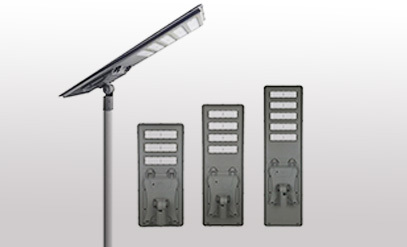
The GMERL200W-S project was engineered to solve these specific environmental stressors through advanced material science and high-redundancy power design.

1. Thermal Management: Defeating the Equatorial Heat
Near the equator, internal temperatures of lamp housings can reach critical levels, shortening the lifespan of lithium batteries and controllers.
- Passive Heat Dissipation: The system utilizes a heavy-duty, ADC12 die-cast aluminum chassis. Unlike plastic alternatives, this acts as a high-performance heat sink, maintaining internal temperatures within the optimal 25°C - 45°C range.
- Decentralized Battery Architecture: By isolating the battery from the LED heat source, we prevent "thermal soaking," ensuring the long-term chemical stability of the LiFePO4 cells.

2. Corrosion Resistance: Coastal Salt-Spray Protection
In cities like Dar es Salaam, coastal humidity causes rapid electrochemical corrosion.
- Hot-Dip Galvanization (HDG): All supporting 8-meter poles undergo a full hot-dip galvanizing process. This creates a metallurgical bond (zinc-iron alloy) that provides sacrificial protection against rust for over 20 years.
- Oxidation-Resistant Housing: The aluminum lamp head is treated with UV-stabilized outdoor powder coating, preventing pitting and surface degradation from salt-laden air.

3. Energy Reliability: "Long Rains" Redundancy
Tanzania’s rainy seasons (Masika) demand a robust energy buffer to maintain lighting during prolonged cloud cover.
- High-Efficiency PV Array: Equipped with dual 210mm monocrystalline panels (1000mm × 670mm), the system maximizes photon capture even in diffuse light conditions.
- Tier-1 Energy Storage: Featuring 500Ah (3.2V) Gotion (Guoxuan) LiFePO4 cells. With a cycle life of 5,000+ deep discharges, this configuration provides 3–5 days of autonomy.


Why Choose Engineered Solar Solutions for Tanzania?
- Zero Utility Cost: Independent of the national grid, ideal for rural expansion.
- Low Maintenance: Built-in MPPT smart diagnostics and modular design reduce on-site service costs.
- Enhanced Safety: Consistent 20+ Lux output eliminates visual blind spots on 4-lane highways.
Conclusion
The Tanzania solar street lighting project demonstrates that "off-the-shelf" is not enough for East Africa. By matching hardware to the environment—through HDG poles, die-cast aluminum housings, and high-redundancy batteries—we deliver a sustainable infrastructure solution that stands the test of time.
Key words:
More Solution
5G + smart streetlights help create smart cities in China.
Will smart cities in the future still have streetlights like today?

National Sales Hotline 7*24 Hours
National University Technology Park, Optoelectronic Information Industry Base, Xiamei Town, Nanan, Quanzhou, Fujian,Province,362302.


